

La Guaira Port is one of Venezuela’s most important gateways for international trade.
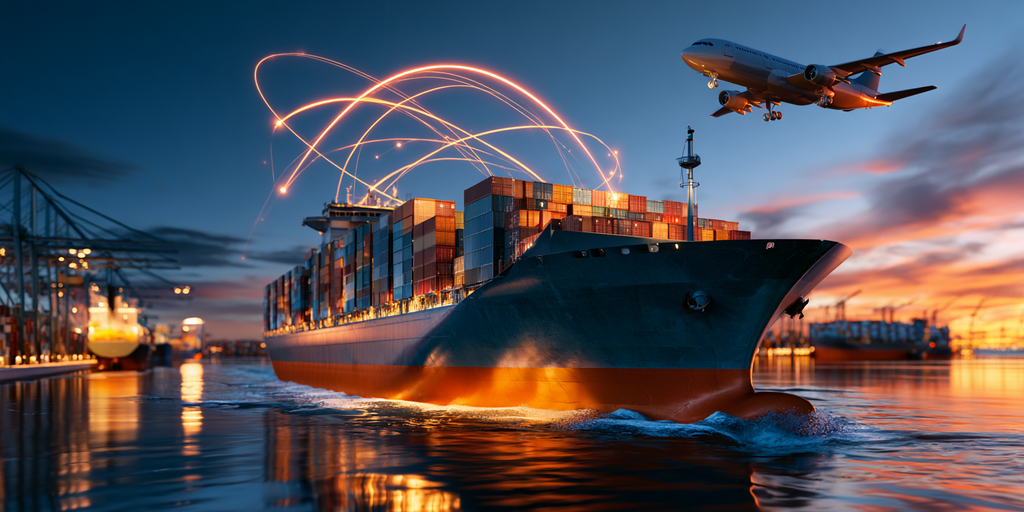
Located on the Caribbean coast and close to Caracas, the port plays a major role in container shipping, general cargo, imports, exports and logistics operations.
Its location is one of its main advantages.
La Guaira is positioned near Venezuela’s capital and close to Simón Bolívar International Airport. As a result, it connects maritime cargo with one of the country’s largest commercial and population centers.
For freight forwarders, courier companies, importers and logistics operators, understanding how La Guaira Port works can help improve cargo planning, documentation, tracking and delivery.
This guide explains the main characteristics of the port, the cargo it handles and the technology needed to manage shipments moving through Venezuela.
What is La Guaira Port?
La Guaira Port is a maritime facility located in La Guaira state on Venezuela’s north-central Caribbean coast.
It is considered one of the country’s main commercial ports.
The port handles different types of cargo, including:
- Containers.
- General cargo.
- Loose cargo.
- Imports.
- Exports.
- Vehicles.
- Commercial merchandise.
Its proximity to Caracas makes it particularly important for companies serving central Venezuela.
According to OCAMAR, the port also includes storage infrastructure for containerized and loose cargo within the primary port zone.
Therefore, La Guaira is not only a place where ships arrive.
It is part of a broader logistics network that connects maritime transportation, customs, warehouses and inland distribution.

Where is La Guaira Port located?
La Guaira Port is located on Venezuela’s Caribbean coast in La Guaira state.
Its location provides access to the greater Caracas region.
In addition, it is relatively close to Simón Bolívar International Airport.
This creates an important logistics corridor between:
Port
↓
Airport
↓
Warehouse
↓
Caracas
↓
Other destinations in Venezuela
Because of this connectivity, La Guaira can be an attractive entry point for companies importing goods into central Venezuela.
Why is La Guaira Port important for Venezuela?
The Port of La Guaira has historically played an important role in Venezuelan international trade.
One major reason is geography.
Caracas represents one of the country’s largest economic centers.
Therefore, receiving cargo close to the capital can reduce the inland transportation distance compared with ports located farther away.
The port supports different logistics activities, such as:
- Importing merchandise.
- Exporting goods.
- Container handling.
- Warehousing.
- Customs processing.
- Freight forwarding.
- Inland transportation.
As a result, many logistics companies include La Guaira within their Venezuela shipping routes.

What type of cargo moves through La Guaira Port?
Different types of merchandise can move through La Guaira Port.
Container cargo
Containers are one of the most common forms of international maritime transportation.
Typical container sizes include:
- 20-foot containers.
- 40-foot containers.
- High-cube containers.
Containers may carry commercial products, personal goods, equipment or consolidated cargo.
General cargo
Not every shipment travels inside a standard container.
General cargo can include:
- Machinery.
- Equipment.
- Boxes.
- Industrial products.
- Commercial merchandise.
The handling process depends on the size and characteristics of the shipment.
Loose cargo
Some freight is transported as loose or breakbulk cargo.
This may include products that cannot easily fit into a standard container.
For example:
- Large machinery.
- Oversized equipment.
- Industrial materials.
These shipments may require special handling.
Vehicle cargo
Vehicles can also move through Venezuelan ports.
Depending on the carrier and service, they may travel through:
- Containers.
- RoRo services.
- Specialized shipping methods.
However, import requirements should always be verified before shipping.
Container shipping through La Guaira Port
Container shipping is one of the most common ways to move international cargo.
A typical shipment may follow this process:
Exporter
↓
Origin warehouse
↓
Container loading
↓
Ocean carrier
↓
La Guaira Port
↓
Customs
↓
Local transportation
↓
Final customer
Every stage creates information that must be tracked.
For example:
- Container number.
- Bill of Lading.
- Shipper.
- Consignee.
- Weight.
- Pieces.
- Cargo description.
- Port status.
- Customs status.
- Delivery status.
For this reason, logistics software becomes increasingly important as shipment volume grows.
FCL shipping to La Guaira Port
FCL means Full Container Load.
In this model, a shipper uses an entire container.
For example:
A company imports enough merchandise to fill a 40-foot container.
The container may move directly from the origin warehouse to the vessel and later arrive at La Guaira.
FCL can be useful for:
- Large commercial shipments.
- Machinery.
- Furniture.
- Retail merchandise.
- Industrial products.
However, companies must consider both transportation costs and customs requirements.

LCL shipping to La Guaira Port
LCL means Less than Container Load.
In this model, different customers share space inside the same container.
For example Customer A cargo, Customer B cargo and Customer C cargo
↓
One consolidated container
This allows smaller companies to use maritime transportation without paying for an entire container.
However, LCL requires good cargo identification.
Each shipment must remain connected to:
- Customer.
- Pieces.
- Weight.
- Volume.
- Documentation.
- Destination.
You can learn more in our guide:
La Guaira Port and cargo consolidation
Consolidation is especially important in international logistics.
Several individual shipments can be grouped into a larger unit.
For example three different shipments, like Shipment 1, Shipment 2 , and Shipment 3
↓
Consolidation
↓
Container
↓
Ocean transport
↓
La Guaira Port
Once the container arrives, each shipment still needs to be identified correctly.
Therefore, freight forwarders need reliable information.
This includes:
- Warehouse receipts.
- Packages.
- Shippers.
- Consignees.
- Weight.
- Dimensions.
- Values.
- Tracking numbers.
A centralized system can make this process easier to manage.
Documents commonly used for shipments to La Guaira Port
International shipments normally require documentation.
The exact requirements depend on the type of cargo and customs procedures.
However, common documents may include:
Commercial invoice
This document describes the goods and their commercial value.
Packing list
A packing list normally includes:
- Packages.
- Weight.
- Dimensions.
- Product descriptions.
Bill of Lading
The Bill of Lading, commonly called BL, is an important ocean transportation document.
It may contain:
- Shipper.
- Consignee.
- Vessel information.
- Origin port.
- Destination port.
- Cargo details.
Additional permits
Some products may require additional authorization.
For example:
- Food.
- Medical products.
- Chemicals.
- Controlled goods.
- Certain electronics.
Therefore, import requirements should be checked before cargo is shipped.
Customs at La Guaira Port
When international cargo arrives in Venezuela, it enters the customs process.
Customs authorities may review:
- Documentation.
- Declared value.
- Product classification.
- Quantity.
- Country of origin.
- Cargo description.
Depending on the shipment, additional inspections or documentation may be required.
For this reason, accurate information is essential.
A vague cargo description can create unnecessary confusion.
For example:
Instead of:
General merchandise
it may be better to identify the products clearly.
For example:
20 cotton shirts
5 laptop computers
10 pairs of athletic shoes
Accurate cargo information can improve both internal logistics and customs preparation.
How long does customs clearance take at La Guaira Port?
There is no single customs clearance time that applies to every shipment.
The process can vary according to:
- Cargo type.
- Documentation.
- Inspections.
- Customs requirements.
- Import permits.
- Volume at the port.
Therefore, companies should avoid promising an exact customs release time unless the shipment has already been cleared.
Instead, it is better to separate:
Ocean transit time
from
Customs clearance time
and
Final delivery time
This creates more realistic expectations for customers.
La Guaira Port operational changes in 2026
In June 2026, earthquakes affected infrastructure and commercial port activity in La Guaira.
Several major ocean carriers temporarily diverted cargo to Puerto Cabello.
For example, Maersk reported that commercial operations were suspended after the earthquake and later announced a gradual return to La Guaira operations beginning in late July and August 2026.
Hapag-Lloyd also temporarily identified Puerto Cabello as the alternative port for cargo originally moving through La Guaira.
Therefore, companies shipping through Venezuela should always verify the current status of the port and their specific ocean carrier before confirming routing.
Port operations can change because of:
- Infrastructure.
- Weather.
- Safety.
- Equipment.
- Carrier schedules.
- Government instructions.
This is another reason why tracking and communication are essential.
La Guaira Port vs. Puerto Cabello
La Guaira and Puerto Cabello are two of Venezuela’s most important commercial ports.
However, they serve different geographic areas.
La Guaira Port
Its location provides convenient access to:
- Caracas.
- La Guaira.
- Central Venezuela.
Puerto Cabello
Puerto Cabello is located farther west in Carabobo state.
It is an important port for:
- Central Venezuela.
- Industrial cargo.
- Container shipping.
- Imports.
- Exports.
The best port depends on factors such as:
- Final destination.
- Ocean carrier.
- Shipping schedule.
- Freight cost.
- Cargo type.
- Customs planning.
Therefore, logistics companies often evaluate both options.
Tracking cargo moving through La Guaira Port
Tracking becomes especially important when shipments pass through multiple stages.
For example:
Received at warehouse
↓
Consolidated
↓
Container loaded
↓
Departed origin
↓
In transit
↓
Arrived at La Guaira
↓
Customs process
↓
Released
↓
Out for delivery
↓
Delivered
Without clear tracking, customers may repeatedly ask:
Where is my cargo?
Did the vessel arrive?
Is customs completed?
When will my shipment be delivered?
A tracking system can reduce this uncertainty.
You can learn more in:
Cargo tracking: how shipment tracking works
How freight forwarders manage La Guaira shipments
A freight forwarder may coordinate different parts of the shipment.
For example:
Origin
- Receive cargo.
- Verify documents.
- Consolidate freight.
Ocean transportation
- Book carrier.
- Generate transportation documents.
- Monitor vessel movement.
Venezuela
- Coordinate customs.
- Arrange release.
- Organize inland transportation.
Final delivery
- Update status.
- Deliver merchandise.
- Register proof of delivery.
Because several companies may participate, maintaining centralized information becomes important.
Why logistics software matters for La Guaira cargo
Managing a few shipments manually may be possible.
However, complexity grows quickly.
Imagine managing:
100 customers
300 packages
20 consolidations
10 containers
Multiple agencies
using spreadsheets and messages.
The operation becomes difficult to control.
A courier software platform can help centralize:
- Customers.
- Warehouse receipts.
- Packages.
- Consolidations.
- Guides.
- Tracking.
- Billing.
- Payments.
- Delivery information.
Therefore, logistics software can provide greater visibility throughout the operation.
Warehouse management before shipping to La Guaira Port
The international transportation process often begins inside a warehouse.
When cargo arrives, operators may register:
- Customer.
- Tracking number.
- Weight.
- Dimensions.
- Pieces.
- Shipper.
- Product description.
- Photographs.
This information can later be connected to the shipment.
As a result, the company maintains traceability from warehouse reception to final delivery.
La Guaira Port and last-mile delivery
The shipment is not complete when the container arrives at the port.
After customs clearance, the cargo still needs to reach the customer.
A typical process may be:
La Guaira Port
↓
Customs release
↓
Warehouse
↓
Route assignment
↓
Delivery vehicle
↓
Customer
Therefore, the last mile should be connected to the international shipment.
You can learn more in our guide:
How to build an efficient delivery system
Notifications for Venezuela cargo shipments
Customers want information before they need to ask.
For example:
You may have Your cargo has departed.
or Your shipment arrived in Venezuela.
Another possibility is Your shipment is in customs processing.
Finally Your cargo has been released.
or either Your shipment is out for delivery.
These notifications can improve the customer experience.
Moreover, they can reduce repetitive support requests.
Companies may use:
- Email.
- SMS.
- WhatsApp.
- Mobile apps.
- Push notifications.
You can learn more in:
KPI for La Guaira Port shipments
Logistics companies should also measure performance.
Useful indicators can include:
Average transit time
Measures transportation time from origin to destination.
Customs processing time
Measures how long cargo remains in the customs process.
Container dwell time
Measures how long containers remain before leaving the port.
Delivery time
Measures time from release to final delivery.
Cost per shipment
Helps evaluate profitability.
Claim rate
Measures shipment-related customer problems.
On-time delivery rate
Shows how many shipments meet the promised delivery window.
You can review more metrics in:
KPI in logistics: key indicators for measuring operations
Common mistakes when shipping cargo through La Guaira Port
Several mistakes can create unnecessary problems.
Incomplete documentation
Missing information may delay customs processing.
Incorrect cargo descriptions
Descriptions should clearly identify the products.
Poor tracking
Customers should understand where their shipment is.
No contingency planning
Port conditions or carrier schedules can change.
Disconnected systems
Using separate spreadsheets for warehouse, cargo and billing can create errors.
Therefore, companies should create a standardized process.
How to improve cargo operations through La Guaira Port
A logistics company can improve its operation step by step.
Step 1. Standardize warehouse reception
Collect the same information for every shipment.
Step 2. Validate documents
Review information before cargo leaves the origin.
Step 3. Track consolidations
Know exactly which shipments belong to each container.
Step 4. Update statuses
Maintain accurate information throughout the journey.
Step 5. Communicate with customers
Send updates when important events occur.
Step 6. Measure performance
Use logistics KPI to identify delays and costs.
Step 7. Automate repetitive tasks
Reduce unnecessary manual work.
TrackingPremium for companies shipping through La Guaira Port
TrackingPremium is a logistics platform designed for courier, freight and cargo companies.
Depending on each company’s configuration, the platform can help manage:
- Customers.
- Warehouse Receipts.
- Packages.
- Rates.
- Consolidations.
- Cargo units.
- Guides.
- Tracking.
- Invoices.
- Payments.
- Pickups.
- Deliveries.
- Agencies.
- Users.
- Notifications.
- Reports.
Therefore, a company managing cargo to Venezuela can keep operational information connected inside one platform.
Frequently asked questions about La Guaira Port
Where is La Guaira Port?
La Guaira Port is located on Venezuela’s north-central Caribbean coast in La Guaira state, near Caracas.
What cargo does La Guaira Port handle?
The port handles containerized cargo, general cargo, loose cargo, imports, exports and other types of commercial freight.
Is La Guaira Port close to Caracas?
Yes. Its proximity to Caracas is one of the port’s main strategic advantages.
Can containers be shipped to La Guaira?
Yes. Container shipping has historically been an important part of the port’s cargo operations, although carrier availability and operational conditions should always be confirmed.
What documents are needed for shipping to La Guaira?
Requirements vary, but common documents may include a commercial invoice, packing list and Bill of Lading.
Does cargo need customs clearance?
International imports must follow the applicable Venezuelan customs procedures.
How can I track cargo arriving at La Guaira Port?
Tracking can combine carrier information, port events, customs statuses and internal logistics updates.
Is La Guaira the only major port in Venezuela?
No. Puerto Cabello is another major Venezuelan commercial port.
Can logistics software manage shipments to Venezuela?
Yes. Logistics software can centralize customers, packages, consolidations, tracking, billing and delivery information.
Manage La Guaira cargo with better visibility
Shipping through La Guaira Port involves much more than moving a container across the ocean.
Companies need to coordinate:
- Warehouses.
- Documentation.
- Consolidations.
- Ocean transportation.
- Customs.
- Tracking.
- Billing.
- Final delivery.
When this information is scattered across different systems, operations become more difficult to manage.
Instead, centralizing the shipment lifecycle can improve visibility and reduce manual work.
TrackingPremium helps courier and logistics companies manage cargo operations, customers, tracking, billing and delivery from one centralized platform.
Want to improve your Venezuela logistics operation?
Request a TrackingPremium demo and see how your company can manage warehouse receipts, packages, consolidations, tracking, billing and deliveries from one system.
[REQUEST A DEMO]